

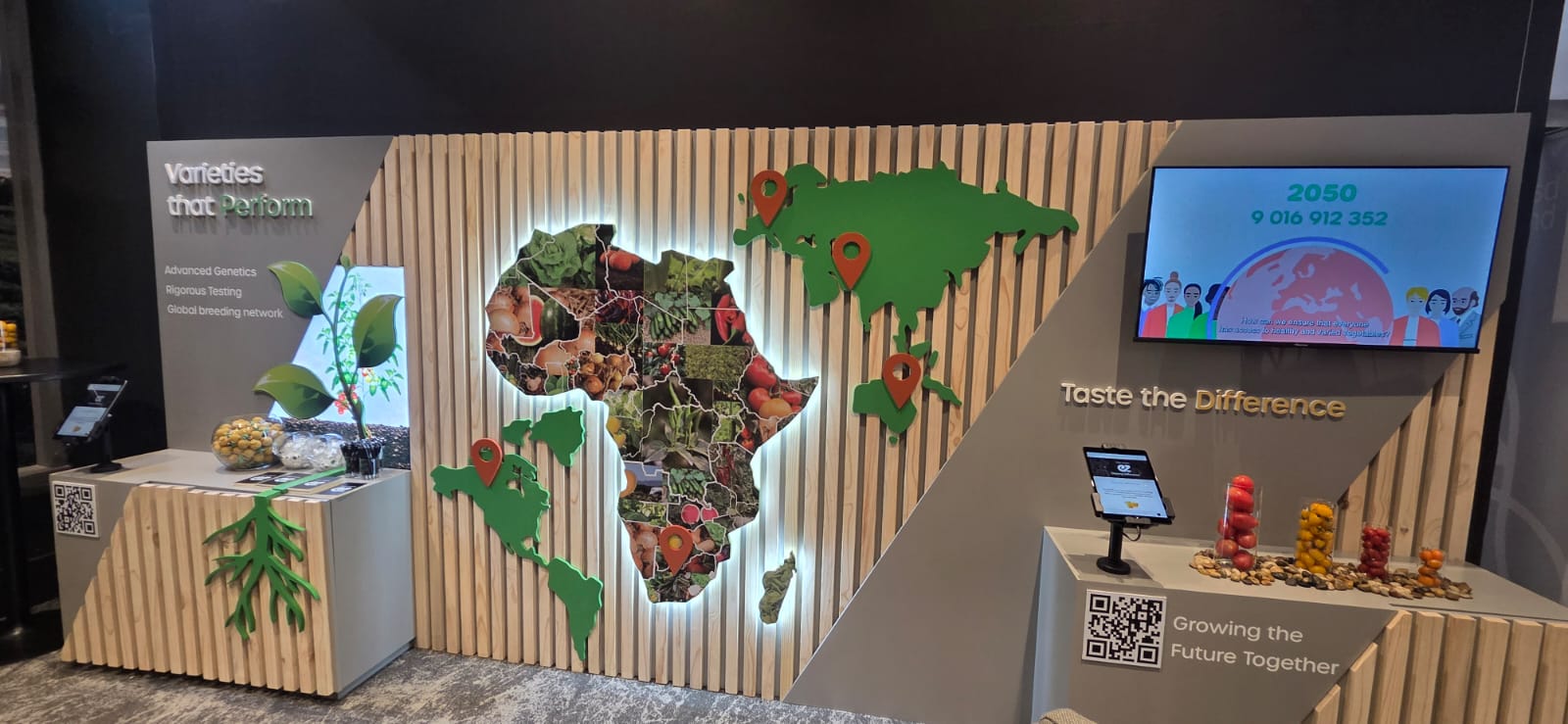
The AFSTA Congress 2026, hosted in the vibrant city of Cape Town, was officially opened by Matome Ramokgopa, Regional Sales Director for Enza Zaden Sub-Saharan Africa, in his capacity as Board Chairperson of the South African National Seed Organization (SANSOR).
It was an honour for Mr. Ramokgopa to welcome delegates from across the continent and beyond, setting the tone for a congress focused on collaboration, innovation, and the future of seed systems in Africa.
The full opening address is shared below.
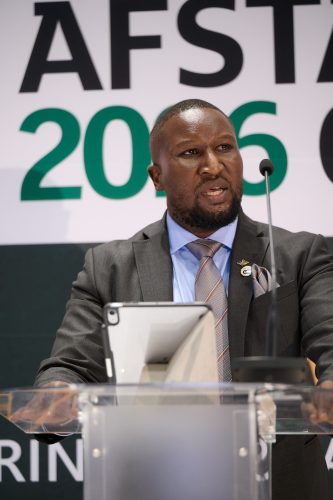
Matome Ramokgopa, Regional Sales Director, Enza Zaden Sub-Saharan Africa & Board Chairperson, SANSOR
"Cape Town is called the Mother City, because this is where much of modern South African history began.
And it is quite fitting for our industry, because some of the earliest recorded crop introductions in this part of the world also started here, when seeds brought by ships were planted at the Cape to see what could grow in African soil.
Africa has always had rich farming traditions, but places like this became early gateways where crops, people, and knowledge met.
And in many ways, that is still what the seed industry represents today.
Programme Director,
Honourable Minister,
Distinguished representatives of government,
Leadership of the African Seed Trade Association,
Leadership of international seed associations
Leadership of national seed associations
Esteemed delegates, partners, colleagues, ladies and gentlemen,
It is with great humility I stand before you, on behalf of the South African National Seed Organisation, the organising committee, and the entire South African seed industry, to welcome you to Cape Town for the AFSTA Congress 2026,
This congress is held under the theme Empowering Africa, One Seed at a Time.
The future of African agriculture will be determined by the strength of the systems we build.
The fact that this congress has exceeded our initial capacity is not merely a logistical matter — it is a sign of the growing importance of the seed sector on our continent, and of the shared recognition that the future of African agriculture will be determined by the strength of the systems we build.
Over the years, this congress has travelled across the continent, sometimes gathering just over one hundred delegates, in other years closer to three or four hundred.
This year, here in South Africa, we approach five hundred participants.
This is not simply a larger meeting. It reflects a moment in which the seed sector has moved to the centre of the conversation about food security, trade, climate resilience, and economic growth in Africa.
As host country, South Africa welcomes you with humility and with responsibility.
Our seed sector in South Africa is valued at just under a billion dollars annually and serving domestic, regional, global markets, has developed through many years of cooperation between government, industry, researchers, and farmers.
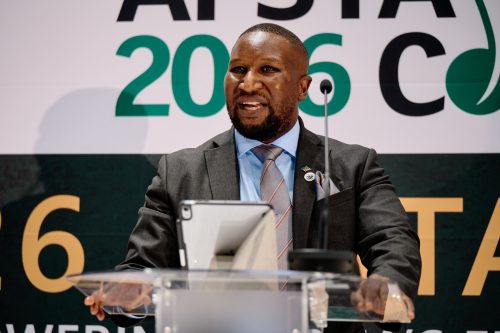
Matome Ramokgopa
It is through this partnership that we have built a system that farmers trust, that investors support, and that markets respect.
In this regard honourable minister, I wish to acknowledge your Department for its continued collaboration within our industry. The relationship between the Department and SANSOR reflects a model of constructive engagement, where regulation and industry work together to ensure both integrity and progress.
Within this framework, SANSOR carries a dual responsibility — as an industry body representing stakeholders across the value chain, and as a designated authority entrusted with specific regulatory functions on behalf of government.
This balance requires discipline, transparency, and above all, trust.
Honourable minister, The strength of any seed system lies in that trust.
Certification, variety registration, and quality assurance are not technical formalities; they are the foundations upon which farmers make decisions, upon which harvests depend, and upon which food security ultimately rests.
More than that SANSORs role as a seed association is its ability to trade and access to the best genetic.
Across Africa, the importance of strong seed systems has never been clearer. Our continent faces the combined pressures of climate variability, population growth, and the need to produce more food to sustain its growing young population. Therefore improved genetics remain one of the most powerful tools available to us.
Within every seed lies the potential for higher yield, greater resilience, improved nutrition, and stronger economies.
The impact of seed innovation extends beyond staple crops. In horticulture and fresh produce, the choice of variety determines quality,
shelf life, transportability, and market acceptance.
The ability of African produce to travel across oceans, to meet the global markets standards and to arrive on supermarket shelves in excellent condition begins not in the packhouse, but in the breeding programme.
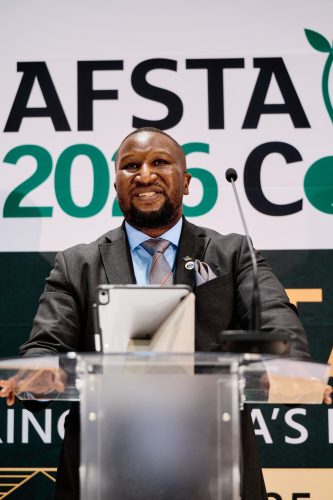
Matome Ramokgopa
Seed is where quality begins.
The future of African agriculture will depend on the strength of our collective effort, on the diversity of our knowledge, and on our willingness to work together toward a common purpose.
It is built through consistency,
through cooperation, and through the steady improvement of systems.
Each new variety released, each hectare certified, each partnership formed — these are the steps through which we strengthen the continent’s agricultural future.
I am therefore reminded of The philosopher Epictetus who said neither should a ship rely on one small anchor, nor should life rest on a single hope.
The future of African agriculture will not depend on one institution, one country, or one company.
It will depend on the strength of our collective effort, on the diversity of our knowledge, and on our willingness to work together toward a common purpose.
In the same spirit, Marcus Aurelius wrote that what is not good for the beehive cannot be good for the bee.
When the seed sector is strong, agriculture is strong.
When agriculture is strong, nations are strong.
When the seed sector is strong, agriculture is strong.
When agriculture is strong, nations are strong.
There is an old saying that a society grows great when people plant trees whose shade they know they will never get to enjoy.
In many ways, this reflects the work that we do in this industry. The varieties we develop today, the systems we build today, and the partnerships we form today will benefit farmers and consumers long into the future, often beyond our own time in this work.
This congress provides a platform to ensure that those decisions are made wisely.
It brings together policymakers, scientists, seed companies, farmers, and development partners to engage on the issues that matter most —
regulatory harmonisation, access to innovation, climate resilience, and the development of the next generation of professionals who will lead this industry forward.
Regional cooperation remains essential especially under the uncertain political times (tariffs, war, disease outbreaks and whatever else the universe throws our way).
As we work toward greater alignment of seed regulations across Africa, we reduce barriers, shorten time to market, and expand access to improved genetics.
The participation of young professionals, entrepreneurs, and women across the seed value chain is not optional — it is essential.
This is what Africa needs
We must also recognise that the strength of our industry will depend on those who follow us. The participation of young professionals, entrepreneurs, and women across the seed value chain is not optional — it is essential.
The systems we build must be strong enough to endure, but flexible enough to grow.
 Ladies and gentlemen,
Hosting this congress in South Africa is an honour, but more importantly it is an opportunity to contribute to a continental vision. We gather here not only to discuss seed, but to discuss the future of food, the future of trade, and the future of agriculture in Africa.
Seed is small in size, but it carries immense power. It carries the power to feed nations, to build economies, and to create stability.
It carries the power to transform potential into reality.
If we continue to invest in science, if we continue to strengthen our institutions, and if we continue to work together as partners across this continent, then the future of African agriculture will not be defined by limitation, but by possibility.
It is therefore my privilege, on behalf of SANSOR, the organising committee, and the people of South Africa, to welcome you to the AFSTA Congress 2026.
May this congress strengthen our partnerships, deepen our resolve, and guide us as we plant the seeds of Africa’s future.
I thank you!"
The AFSTA Congress 2026, hosted in the vibrant city of Cape Town, was officially opened by Matome Ramokgopa, Regional Sales Director for Enza Zaden Sub-Saharan Africa, in his capacity as Board Chairperson of the South African National Seed Organization (SANSOR).
It was an honour for Mr. Ramokgopa to welcome delegates from across the continent and beyond, setting the tone for a congress focused on collaboration, innovation, and the future of seed systems in Africa.
The full opening address is shared below.
Matome Ramokgopa, Regional Sales Director, Enza Zaden Sub-Saharan Africa & Board Chairperson, SANSOR
"Cape Town is called the Mother City, because this is where much of modern South African history began.
And it is quite fitting for our industry, because some of the earliest recorded crop introductions in this part of the world also started here, when seeds brought by ships were planted at the Cape to see what could grow in African soil.
Africa has always had rich farming traditions, but places like this became early gateways where crops, people, and knowledge met.
And in many ways, that is still what the seed industry represents today.
Programme Director,
Honourable Minister,
Distinguished representatives of government,
Leadership of the African Seed Trade Association,
Leadership of international seed associations
Leadership of national seed associations
Esteemed delegates, partners, colleagues, ladies and gentlemen,
It is with great humility I stand before you, on behalf of the South African National Seed Organisation, the organising committee, and the entire South African seed industry, to welcome you to Cape Town for the AFSTA Congress 2026,
This congress is held under the theme Empowering Africa, One Seed at a Time.
We are here today as representatives of more than 40 nationalities and close to five hundred registered delegates, and many more who wished to attend.
The fact that this congress has exceeded our initial capacity is not merely a logistical matter — it is a sign of the growing importance of the seed sector on our continent, and of the shared recognition that the future of African agriculture will be determined by the strength of the systems we build.
Over the years, this congress has travelled across the continent, sometimes gathering just over one hundred delegates, in other years closer to three or four hundred.
This year, here in South Africa, we approach five hundred participants.
This is not simply a larger meeting. It reflects a moment in which the seed sector has moved to the centre of the conversation about food security, trade, climate resilience, and economic growth in Africa.
As host country, South Africa welcomes you with humility and with responsibility.
Our seed sector in South Africa is valued at just under a billion dollars annually and serving domestic, regional, global markets, has developed through many years of cooperation between government, industry, researchers, and farmers.
Matome Ramokgopa
It is through this partnership that we have built a system that farmers trust, that investors support, and that markets respect.
In this regard honourable minister, I wish to acknowledge your Department for its continued collaboration within our industry. The relationship between the Department and SANSOR reflects a model of constructive engagement, where regulation and industry work together to ensure both integrity and progress.
Within this framework, SANSOR carries a dual responsibility — as an industry body representing stakeholders across the value chain, and as a designated authority entrusted with specific regulatory functions on behalf of government.
This balance requires discipline, transparency, and above all, trust.
Honourable minister, The strength of any seed system lies in that trust.
Certification, variety registration, and quality assurance are not technical formalities; they are the foundations upon which farmers make decisions, upon which harvests depend, and upon which food security ultimately rests.
More than that SANSORs role as a seed association is its ability to trade and access to the best genetic.
Across Africa, the importance of strong seed systems has never been clearer. Our continent faces the combined pressures of climate variability, population growth, and the need to produce more food to sustain its growing young population. Therefore improved genetics remain one of the most powerful tools available to us.
Within every seed lies the potential for higher yield, greater resilience, improved nutrition, and stronger economies.
The impact of seed innovation extends beyond staple crops. In horticulture and fresh produce, the choice of variety determines quality,
shelf life,
transportability,
and market acceptance.
The ability of African produce to travel across oceans, to meet the global markets standards and to arrive on supermarket shelves in excellent condition begins not in the packhouse, but in the breeding programme.
Matome Ramokgopa
Seed is where quality begins.
The theme of this congress, Empowering Africa, One Seed at a Time, reminds us that progress in agriculture is not achieved through a single moment of change.
It is built through consistency,
through cooperation,
and through the steady improvement of systems.
Each new variety released, each hectare certified, each partnership formed — these are the steps through which we strengthen the continent’s agricultural future.
I am therefore reminded of The philosopher Epictetus who said neither should a ship rely on one small anchor, nor should life rest on a single hope.
The future of African agriculture will not depend on one institution, one country, or one company.
It will depend on the strength of our collective effort, on the diversity of our knowledge, and on our willingness to work together toward a common purpose.
In the same spirit, Marcus Aurelius wrote that what is not good for the beehive cannot be good for the bee.
Our individual success as organisations, as countries, and as businesses will always depend on the health of the wider system in which we operate.
When the seed sector is strong, agriculture is strong.
When agriculture is strong, nations are strong.
There is an old saying that a society grows great when people plant trees whose shade they know they will never get to enjoy.
In many ways, this reflects the work that we do in this industry. The varieties we develop today, the systems we build today, and the partnerships we form today will benefit farmers and consumers long into the future, often beyond our own time in this work.
This congress provides a platform to ensure that those decisions are made wisely.
It brings together policymakers, scientists, seed companies, farmers, and development partners to engage on the issues that matter most —
regulatory harmonisation,
access to innovation,
climate resilience,
and the development of the next generation of professionals who will lead this industry forward.
Regional cooperation remains essential especially under the uncertain political times (tariffs, war, disease outbreaks and whatever else the universe throws our way)
As we work toward greater alignment of seed regulations across Africa, we reduce barriers, shorten time to market, and expand access to improved genetics.
When seed moves more efficiently, food moves more efficiently. When innovation moves more efficiently, opportunity moves with it.
This is what Africa needs
We must also recognise that the strength of our industry will depend on those who follow us. The participation of young professionals, entrepreneurs, and women across the seed value chain is not optional — it is essential.
The systems we build must be strong enough to endure, but flexible enough to grow.
Ladies and gentlemen,
Hosting this congress in South Africa is an honour, but more importantly it is an opportunity to contribute to a continental vision. We gather here not only to discuss seed, but to discuss the future of food, the future of trade, and the future of agriculture in Africa.
Seed is small in size, but it carries immense power. It carries the power to feed nations, to build economies, and to create stability.
It carries the power to transform potential into reality.
If we continue to invest in science, if we continue to strengthen our institutions, and if we continue to work together as partners across this continent, then the future of African agriculture will not be defined by limitation, but by possibility.
It is therefore my privilege, on behalf of SANSOR, the organising committee, and the people of South Africa, to welcome you to the AFSTA Congress 2026.
May this congress strengthen our partnerships, deepen our resolve, and guide us as we plant the seeds of Africa’s future.
I thank you!"